China has become a major sourcing base for animal feed manufacturers serving farms, distributors, and integrators worldwide. Its production landscape includes premix suppliers, aqua feed producers, livestock nutrition companies, and complete feed factories. Buyers can find factories with automated batching systems, laboratory testing, and export-focused documentation.
Quality still depends on the individual manufacturer.
Dr. Harinder P.S. Makkar, an internationally recognized animal nutrition specialist, stated, “Feed safety is a shared responsibility.” This principle matters when comparing Chinese suppliers. A reliable company should explain ingredient origins, moisture limits, storage conditions, and testing procedures. Buyers should request certificates, recent laboratory reports, product specifications, and traceability records. Factory visits can also reveal practical details, such as clean silos, covered loading areas, calibrated weighing equipment, and separated raw-material zones.
Look beyond attractive prices.
The strongest manufacturers usually control formulation accuracy, pellet durability, microbial risks, and delivery consistency. They may also adapt formulas for broilers, layers, pigs, cattle, shrimp, or regional climate conditions. A humid shipping route can affect packaging and shelf life. That detail is easy to underestimate.
Certifications support trust, but they do not replace careful verification. A certificate may be valid while a shipment still fails to meet a buyer’s precise requirements. This is where experience becomes valuable. Ask clear questions, compare samples, and confirm production capacity before signing a long-term agreement.
This guide examines China’s best animal feed manufacturers for global buyers. It considers technical capability, product range, quality systems, communication, export experience, and practical reliability. No supplier is perfect. Careful evaluation remains essential.
China Best Animal Feed Manufacturers for Global Buyers
Animal Feed Manufacturing in China: Industry Scope and Product Categories
China’s animal feed manufacturing industry serves livestock, poultry, aquaculture, and companion animals. Production clusters combine grain processing, premix formulation, laboratory testing, and bulk logistics. Common products include complete feed, concentrates, premixes, additives, and specialty nutrition blends. Feed mills may produce pellets, crumbles, mash, or floating aquaculture feed. Each form affects storage, handling, and animal intake. This breadth gives global buyers many sourcing options. It also makes comparison difficult.
For livestock, buyers often request energy-balanced rations, protein concentrates, mineral premixes, and non-medicated nutritional solutions. Poultry products may include starter, grower, layer, and breeder formulas. Aquaculture lines commonly use floating pellets with controlled water stability. Ruminant feed can include silage additives, mineral blocks, and high-fiber mixes. Companion animal products require closer attention to digestibility, palatability, and declared nutrients. Product names alone are insufficient. Ask for ingredient specifications, batch records, shelf-life data, and laboratory results.
A practical factory audit should examine ingredient receiving, batching accuracy, mixing uniformity, and contamination controls. Reliable facilities can provide traceability from silo to finished bag, with retained samples and moisture records. Destination-market registration and labeling still require buyer verification. A catalogue is not proof. Some factories communicate quickly but document slowly, creating avoidable risk. I would question any quote that hides minimum order quantities, lead times, or testing costs. The process is not perfect. Repeated sampling remains necessary when formulas, suppliers, or seasons change.
Industry scope, product categories, manufacturing characteristics, and buyer considerations
| Industry Segment | Main Product Categories | Primary Target Species | Typical Product Form | Typical Manufacturing Scope | Key Buyer Considerations |
|---|---|---|---|---|---|
| Pig Feed | Sow feed, nursery feed, grower-finisher feed, and specialty pig diets | Sows, piglets, growers, and finishers | Mash, pellets, and crumbles | Energy, amino-acid, mineral, vitamin, and functional-feed formulation for different production stages | Crude protein and amino-acid specifications, mycotoxin controls, pellet durability, medication status, and shelf life |
| Poultry Feed | Broiler starter, grower and finisher feed; layer feed; breeder feed; chick feed | Broilers, layers, breeders, ducks, geese, and other poultry | Crumbles, pellets, and mash | Phase feeding, calcium and phosphorus balancing, amino-acid optimization, and flock-specific nutrition | Bird age, feed conversion objectives, calcium particle size for layers, salmonella controls, and export documentation |
| Ruminant Feed | Dairy concentrate, beef cattle feed, calf starter, premixes, and mineral supplements | Dairy cattle, beef cattle, calves, sheep, and goats | Pellets, meal, blocks, and granules | Fiber, energy, protein, minerals, buffers, and rumen-support formulations | Neutral detergent fiber, starch level, mineral balance, urea controls, moisture, and suitability for local forage systems |
| Aquatic Feed | Fish feed, shrimp feed, crab feed, juvenile feed, and broodstock feed | Freshwater fish, marine fish, shrimp, crabs, and other farmed aquatic species | Floating pellets, sinking pellets, micro-pellets, and crumbles | Water stability, extrusion or pelleting, digestibility enhancement, and species- or life-stage-specific nutrition | Water stability, sinking or floating behavior, pellet size, nutrient leaching, marine-ingredient controls, and packaging moisture barriers |
| Pet Food | Dry dog food, dry cat food, wet food, treats, supplements, and functional diets | Dogs and cats | Kibble, canned or retort-packed food, pouches, chews, and tablets | Extrusion, drying, coating, thermal processing, palatability enhancement, and nutritional positioning | Ingredient traceability, nutritional adequacy, microbiological testing, claims compliance, packaging, and target-market registration |
| Premixes | Vitamin premixes, mineral premixes, trace-element blends, and compound premixes | Livestock, poultry, aquaculture, and specialty animal sectors | Powder, granules, and water-soluble products | Micro-ingredient weighing, carrier selection, blending uniformity, and stability management | Homogeneity, active-ingredient concentration, compatibility, storage stability, inclusion rate, and contamination prevention |
| Concentrates | Protein concentrates, mineral concentrates, and high-nutrient farm concentrates | Pigs, poultry, cattle, sheep, goats, and other farmed animals | Meal, pellets, and crumble | High-density nutrient formulation designed for blending with grains or other farm feed materials | Recommended mixing ratio, nutrient concentration, ingredient compatibility, local grain availability, and storage conditions |
| Functional and Specialty Feed | Probiotic products, acidifiers, enzyme preparations, toxin binders, herbal additives, and immune-support products | Species- and production-stage dependent | Powder, liquid, granules, and coated additives | Functional-ingredient selection, carrier systems, compatibility testing, and stability validation | Permitted claims, dosage, strain or enzyme activity, thermal stability, analytical verification, and destination-country rules |
| Manufacturing Area | Common Operations | Relevant Quality Parameters | Global Buyer Relevance |
|---|---|---|---|
| Raw Material Receiving | Supplier approval, sampling, weighing, inspection, and storage of grains, meals, oils, minerals, and additives | Moisture, protein, fat, foreign matter, mycotoxins, microbiological status, and traceability | Supports consistent formulation and reduces risks associated with variable raw-material quality |
| Grinding and Batching | Particle-size reduction, ingredient dosing, micro-ingredient weighing, and formula-controlled batching | Particle-size distribution, dosing accuracy, batch weight, and cross-contamination control | Influences digestibility, mixing uniformity, product performance, and repeat-order consistency |
| Mixing and Conditioning | Dry mixing, liquid addition, steam conditioning, and thermal treatment where applicable | Mixing uniformity, temperature, moisture, retention time, and microbial reduction | Important for nutrient distribution, feed safety, and stable physical quality |
| Pelleting or Extrusion | Pellet pressing, extrusion, drying, cooling, crumbling, screening, and coating | Pellet diameter, durability, bulk density, water stability, expansion, and nutrient retention | Determines suitability for poultry, pigs, aquaculture, pets, and automated feeding systems |
| Laboratory Testing | Chemical, physical, microbiological, and contaminant testing of raw materials and finished feed | Protein, moisture, fat, fiber, minerals, aflatoxin, heavy metals, pathogens, and active ingredients | Provides evidence for product release, buyer approval, customs clearance, and market compliance |
| Packaging and Export Logistics | Bagging, bulk loading, palletizing, container loading, labeling, and export-document preparation | Net weight, batch coding, moisture protection, seal integrity, label accuracy, and container cleanliness | Affects product shelf life, traceability, transport losses, and destination-market acceptance |
| Evaluation Dimension | Recommended Information to Request | Why It Matters |
|---|---|---|
| Formula and Nutrition | Guaranteed analysis, ingredient list, inclusion rate, target species, production stage, and feeding instructions | Confirms that the product matches animal requirements and local feed practices |
| Safety and Compliance | Certificate of analysis, contaminant testing, microbiological results, additive declarations, and applicable registrations | Helps demonstrate conformity with importing-country feed-safety requirements |
| Physical Quality | Pellet size, hardness, durability, bulk density, water stability, moisture, and appearance specifications | Determines handling performance, feed intake, storage behavior, and suitability for equipment |
| Customization | Minimum order quantity, formula adjustment options, packaging formats, private-label capability, and sample policy | Clarifies whether the supplier can support local raw materials, climate, species, and market positioning |
| Supply and Delivery | Production lead time, loading port, container capacity, Incoterms, shelf life, and shipping documents | Supports landed-cost calculations and reduces delays during international shipment |
Selecting a reliable Chinese animal feed manufacturer requires more than comparing prices. Start by checking business licenses, production qualifications, export records, and the factory’s quality management procedures. Ask for recent test reports covering moisture, protein, heavy metals, microbial limits, and prohibited contaminants. Reports should identify the tested batch, laboratory, and testing date. Paper is not enough.
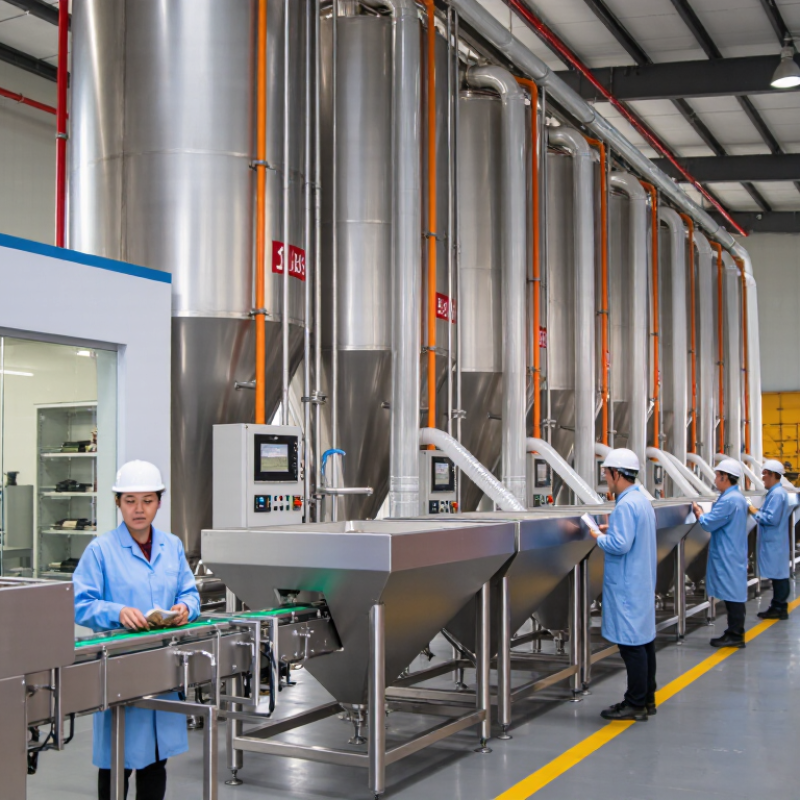
A practical factory review should include the raw material warehouse, batching area, pellet line, laboratory, and finished-goods storage. Look for clean floors, sealed ingredient bags, pest-control records, and clear batch labels. Ask how staff prevent cross-contamination between formulas. Request a traceability exercise. The manufacturer should explain how one pallet can be tracked back to its ingredients and production shift.
Evaluate technical capability, not only equipment size. Discuss your animals, climate, feeding stage, target performance, and storage conditions. A competent team should adjust formulations with evidence and explain ingredient choices clearly. Request samples from a normal production batch, not a specially prepared sample. Compare smell, color, pellet durability, packaging strength, and laboratory results. Details matter.
Communication also reveals reliability. Confirm minimum order quantities, lead times, packaging options, inspection procedures, and corrective actions for defective goods. A written specification reduces misunderstandings. Still, one weakness remains: factory visits can show only one day. Independent inspections and repeated orders provide stronger evidence. Trust should grow slowly.
Global buyers need more than a factory list. They need clear manufacturer profiles that show practical experience, technical depth, and dependable export capability. A credible profile should explain production capacity, feed categories, quality controls, and the markets served. Details matter. Ask whether the manufacturer can provide batch records, ingredient specifications, laboratory results, and shipment documents.
Experienced manufacturers usually describe how they manage raw material receiving, storage, mixing, pelleting, and final inspection. Their facilities should show controlled moisture levels, calibrated equipment, and separated production areas where appropriate. Independent testing can help verify nutritional values and safety indicators. Buyers should also examine traceability procedures, recall readiness, and communication practices. A polished website is not enough. Records reveal reality.
Reliable suppliers understand that different regions require different labeling, packaging, and documentation. They can discuss container loading, shelf-life protection, and support after delivery without making unrealistic promises. However, no manufacturer is perfect; delays, formulation adjustments, or testing discrepancies may still occur. The important question is how openly the supplier handles these problems. Request recent production samples, audit evidence, and references from comparable buyers. A direct factory video call may reveal more than a sales brochure. Some profiles remain vague about subcontracting, which deserves careful questioning before any long-term agreement.
China’s strongest animal feed manufacturers build quality into daily production. Global buyers should examine raw material controls, storage conditions, and batch consistency. A reliable facility tests grains, protein sources, and additives before use. It also records supplier details, production dates, and batch numbers. These records support fast traceability when problems appear.
Look for documented GMP and HACCP systems, supported by regular internal audits. ISO 22000 certification can show a structured food safety management process. However, a certificate alone proves little. Buyers should verify its validity, issuing body, and covered production site. Independent testing should check mycotoxins, heavy metals, pathogens, moisture, and nutritional values. Request a current certificate of analysis for every shipment.
Export compliance requires more than laboratory results. Labels must match the destination market’s language and ingredient rules. Product documents should include specifications, safety data, packing details, and origin information. Manufacturers should understand customs requirements and maintain sealed, clean packaging during loading. Container photographs can provide useful evidence. They are simple, but often overlooked.
In practice, even experienced buyers can miss small inconsistencies. A minor label difference may delay clearance. A rushed audit may hide weak storage controls. Ask for production samples, audit access, and corrective-action records. Good suppliers explain failures honestly and show how they prevent repetition. That response often reveals more than polished marketing material.
China’s feed manufacturing base offers scale, but scale does not guarantee a suitable export partner. The Alltech Agri-Food Outlook 2024 reported global feed production of 1.126 billion metric tons in 2023. China produced approximately 262.7 million tons, or nearly 23% of the total. Buyers should compare audited capacity, batch consistency, and export experience rather than relying on factory size alone. Ask for recent certificates of analysis, ingredient specifications, and traceability records.
Pricing needs a practical calculation. Raw materials, formulation complexity, packaging, inland transport, testing, and export documentation all affect the final quotation. The FAO Food Price Index averaged 122.0 points in 2023, showing how commodity volatility can influence feed inputs. Request a price validity period. Also clarify whether the offer uses FOB, CFR, or another Incoterm. A low factory price may hide port fees, special packaging, or minimum-order costs. That assumption can fail.
Logistics planning should begin before production. Confirm the loading port, production lead time, container capacity, pallet dimensions, and required shipping documents. Dry feed still needs moisture protection. During humid weather, weak packaging can create clumping or quality disputes. Use independent pre-shipment inspection when order value is significant. Keep communication records for specifications and approved samples. I would also build a small schedule buffer; freight bookings and customs checks rarely move perfectly. The World Bank’s Commodity Markets Outlook has repeatedly highlighted significant commodity-price uncertainty, so fixed annual pricing deserves careful review.