Buying ingredients for animal feed is not simply a matter of choosing the lowest price. Each ingredient affects animal performance, feed safety, production costs, and customer trust. Buyers must examine protein quality, energy value, fiber levels, mineral balance, moisture, and digestibility. Small differences can become expensive problems across thousands of animals.
Dr. Harinder P.S. Makkar, an internationally recognized feed and livestock nutrition expert, has stated, “Feed safety is a shared responsibility.” That principle should guide every purchasing decision. A reliable buyer checks the certificate of analysis, supplier history, storage conditions, and traceability records. They also ask practical questions. Was the shipment exposed to rain? Does the material smell fresh? Are moisture readings consistent between bags? These details matter.
The top 10 ingredients for animal feed may include corn, wheat, soybean meal, fishmeal, oil, limestone, phosphate, salt, premixes, and functional additives. Their value depends on more than their names. Origin, processing temperature, contamination risks, seasonal availability, and storage quality can change their real performance. A cheaper ingredient may require more supplementation or create uneven growth.
There is room for honest doubt. Laboratory results are essential, but one test cannot describe every shipment. Buyers need repeated checks and experienced judgment. This guide explores the key ingredients for animal feed and the purchasing signals that deserve closer attention. It focuses on practical quality control, responsible sourcing, and decisions that remain reliable beyond the sales quotation.
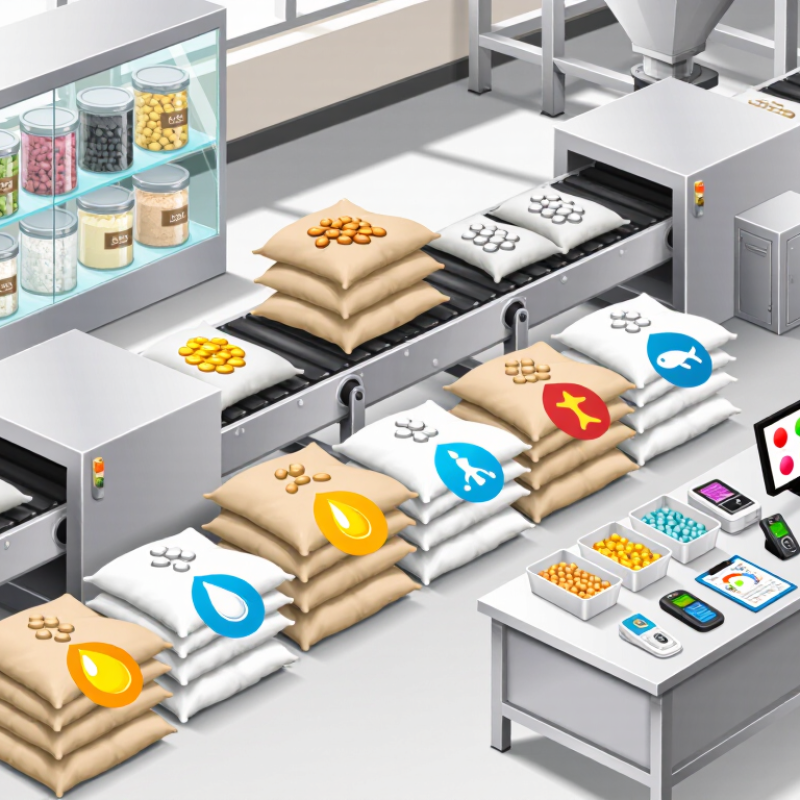
Animal feed ingredients are not interchangeable commodities. Each one changes energy, protein, digestion, mineral balance, or feed stability. Buyers who understand these functions can judge value beyond the purchase price.
Corn, wheat, and barley mainly supply energy, but their starch levels and digestibility differ. Soybean meal and canola meal provide protein, while fishmeal can add concentrated amino acids. Vegetable oil increases energy density and helps reduce dusty feed. Limestone supplies calcium, and dicalcium phosphate supports calcium and phosphorus needs. Vitamin-mineral premixes fill small but important nutritional gaps. Salt supports electrolyte balance. Small quantities can matter greatly.
The Alltech Agri-Food Outlook 2024 reported global feed production of about 1.126 billion metric tons in 2023. That scale makes ingredient consistency a serious purchasing issue. OECD-FAO Agricultural Outlook 2024–2033 also highlights continuing growth in livestock production and feed demand. Buyers should check moisture, protein, fiber, mycotoxins, oxidation, and particle size. Ask for recent certificates of analysis, not old averages. A low-cost ingredient may reduce performance when its nutrient value varies. That is easy to miss.
The practical lesson is uncomfortable. Formula savings can become higher costs through poor weight gain, wet litter, or rejected batches. Supplier reliability, traceability, and storage conditions deserve the same attention as price. Nutritional software helps, but it cannot repair inaccurate laboratory data. Good buying still requires questioning the numbers.
For animal-feed buyers, ingredient names are only the starting point. Quality changes with harvest, storage, processing, and species. USDA’s 2024/25 WASDE estimates global coarse-grain output at about 1.5 billion metric tons. That scale explains price exposure. The core grain group includes corn, wheat, barley, and sorghum. Corn supplies dependable energy, while wheat can improve pellet binding. Barley and sorghum need closer checks for fiber, tannins, and digestibility. Measure moisture and test for mycotoxins before contracting. Cheap grain can become expensive after spoilage.
The protein group includes soybean meal, rapeseed meal, and fish meal. USDA data places 2024/25 global soybean production near 421 million metric tons. Soybean meal remains valuable for amino acid density, but heat damage can reduce protein availability. Rapeseed meal adds protein and fiber, although glucosinolate levels require attention. Fish meal offers concentrated protein and minerals. Supply consistency is not guaranteed. Check origin, freshness, ash, and oxidation indicators.
Fiber materials include wheat bran, rice bran, and alfalfa meal. They can support gut function and reduce formulation cost, yet excessive fiber may dilute dietary energy. FAO feed and livestock assessments repeatedly stress digestibility, feed safety, and balanced nutrient supply. Buyers should compare nutrients on a dry-matter basis. A neat ranking is tempting, but it is misleading. Species, age, climate, and processing can change the best choice. Keep retention samples and review laboratory results against supplier documents. Mistakes still happen. The useful habit is learning from them.
Typical nutritional ranges and purchasing considerations for common feed ingredients
| No. | Ingredient | Category | Common Feed Forms | Typical Crude Protein (% of Dry Matter) |
Typical Crude Fiber (% of Dry Matter) |
Indicative Inclusion Range (% of Complete Feed) |
Main Nutritional Contribution | Key Buying and Quality Checks |
|---|---|---|---|---|---|---|---|---|
| 1 | Maize (Corn) | Grain | Whole grain, cracked, ground, rolled | 8–10% | 2–3% | 20–60% | High-energy starch source with relatively low fiber; commonly used to support growth and weight gain. | Check moisture, broken kernels, mold, insect damage, foreign material, and mycotoxins such as aflatoxin. |
| 2 | Wheat | Grain | Whole wheat, ground, rolled | 10–14% | 2–3% | 10–50% | Provides digestible starch and more protein than maize; useful in poultry, swine, and ruminant diets. | Evaluate moisture, test weight, sprouting, mycotoxins, and the risk of diet stickiness or rapid starch digestion. |
| 3 | Barley | Grain | Whole grain, rolled, ground, steam-flaked | 9–13% | 4–6% | 10–40% | Moderate-energy grain that supplies starch and more fermentable fiber than maize or wheat. | Check test weight, hull proportion, moisture, mold, and beta-glucan levels, especially for poultry diets. |
| 4 | Sorghum | Grain | Whole grain, cracked, ground | 9–12% | 2–3% | 10–50% | Concentrated energy source that can substitute for other cereal grains when properly processed. | Assess tannin level, moisture, kernel color, mold, foreign material, and particle size after grinding. |
| 5 | Soybean Meal | Protein Source | Solvent-extracted meal, dehulled meal | 44–48% | 3–7% | 10–35% | Highly digestible plant protein with a strong amino acid profile, particularly for lysine. | Verify crude protein, moisture, urease activity, trypsin inhibitor control, fiber level, and absence of adulteration. |
| 6 | Canola Meal | Protein Source | Meal, expeller meal, solvent-extracted meal | 34–38% | 10–12% | 5–20% | Useful protein source with substantial sulfur-containing amino acids and moderate energy value. | Check protein, fiber, moisture, residual oil, glucosinolate level, and particle uniformity. |
| 7 | Fish Meal | Protein Source | Pressed meal, steam-dried meal, low-temperature meal | 60–72% | 0.5–1.5% | 1–10% | Concentrated, highly digestible protein that also supplies minerals and marine-origin omega-3 fatty acids. | Review protein, ash, freshness, biogenic amines, oxidation, moisture, contaminants, and species or origin documentation. |
| 8 | Alfalfa Meal | Fiber Material | Sun-cured meal, dehydrated meal, chopped forage | 15–20% | 20–30% | 5–20% | Provides structural fiber, plant protein, calcium, and naturally occurring pigments and vitamins. | Check leaf-to-stem ratio, maturity, color, moisture, ash, sand, mold, and particle size. |
| 9 | Beet Pulp | Fiber Material | Dried pulp, pellets, shreds | 8–11% | 17–23% | 5–20% | Highly digestible, fermentable fiber source that can support rumen function and energy supply. | Evaluate moisture, sugar content, particle size, bulk density, mold, and pellet durability. |
| 10 | Rice Bran | Fiber Material | Raw rice bran, stabilized rice bran, defatted bran | 12–16% | 7–12% | 5–20% | Supplies fiber, fat, phosphorus, and useful energy; nutrient value varies considerably with stabilization and extraction. | Check freshness, free fatty acids, rancidity, moisture, silica, adulteration, and the proportion of hulls. |
Nutrient values are typical reference ranges on a dry-matter basis and can vary with crop variety, processing method, maturity, storage, and analytical procedure. Inclusion ranges are indicative only and should be adjusted according to animal species, production stage, formulation targets, and local feed regulations.
Top 10 Ingredients for Animal Feed Buyers Should Know
Vitamins and minerals control more than basic growth. Vitamin A supports vision, immunity, and healthy tissue. Vitamin D helps animals use calcium and phosphorus for strong bones. Vitamin E protects cells from oxidative stress. Vitamin K supports normal blood clotting. B vitamins assist energy metabolism and feed utilization. Calcium and phosphorus must stay balanced, especially in poultry and dairy diets. Salt supplies sodium and chloride for fluid balance. Zinc supports skin, hoof, feather, and immune function. Selenium works with antioxidant enzymes, but its inclusion requires careful control.
Additives can improve feed performance when used for a clear purpose. Essential amino acids, such as lysine and methionine, help build muscle and reduce unnecessary protein waste. Enzymes may improve the release of nutrients from grains and other plant materials. Probiotics can support a stable intestinal environment, although results depend on strain, storage, and animal age. Buyers should check assay values, batch consistency, shelf life, and contamination controls. A low price can hide weak potency.
Formulation is rarely perfect. Weather, raw material quality, and water intake can change results. I have found that small mineral errors sometimes become large production problems. Laboratory testing and production records deserve more attention than attractive packaging. It is also worth questioning whether every additive has measurable value in the target herd or flock. Local regulations and species-specific requirements must guide final purchasing decisions.
Top 10 Ingredients for Animal Feed Buyers Should Know
Feed buyers should evaluate corn, soybean meal, wheat, fishmeal, oil, DDGS, forage, amino acids, vitamins, and minerals together. Ingredient names alone reveal little. Corn may supply energy, but moisture, mycotoxins, test weight, and starch availability can vary sharply. Soybean meal requires attention to protein level, fiber, urease activity, and heat damage. Keep the laboratory report close.
Safety testing must match the ingredient’s risks. Screen grains for aflatoxin, deoxynivalenol, fumonisins, and zearalenone. Test fishmeal for oxidation, pathogens, heavy metals, and excessive ash. For oils, check peroxide value and free fatty acids. FAO and WHO report that contaminated food causes about 600 million illnesses annually, showing why feed controls matter. Feed safety is not only a farm issue.
Nutrition values should come from current laboratory analysis, not old tables. Compare crude protein with digestible amino acids, available phosphorus, energy, and fiber. Alltech’s Agri-Food Outlook 2024 estimated global feed production at 1.126 billion tonnes in 2023. At that scale, small quality shifts can affect thousands of diets. Require supplier specifications, batch sampling, traceability, and storage records. Consistency matters most. Yet perfect uniformity is unrealistic. I would still question a clean certificate when the sample smells rancid, feels unusually warm, or shows uneven particle size. Evaluate the ingredient, the evidence, and the gap between them.
Buyers usually compare corn, wheat, barley, soybean meal, canola meal, rice bran, fish meal, limestone, dicalcium phosphate, and vitamin-mineral premixes. Price is only one part of the decision. A cheaper cargo may contain more moisture, broken material, or inconsistent protein. Ask for recent laboratory results, not an old specification sheet. Check protein, fiber, moisture, mycotoxins, and contamination limits before signing.
Supplier Reliability Supplier reliability matters during harvest changes and port delays. Request delivery records, production capacity, certificates, and a clear claim process. I have seen purchasing teams focus heavily on the quoted price and overlook inland freight. That error can erase the saving. Compare delivered cost per usable tonne, including testing, insurance, handling, and possible drying charges. Use at least two qualified suppliers for critical ingredients. One source may look efficient. It may also become a serious weakness.
Storage & Risk Planning Storage conditions affect both quality and working capital. Keep corn and grains cool, dry, and aerated. Inspect silos for leaks, insects, hot spots, and condensation after temperature changes. Meals need clean, sealed areas because odors and moisture can spread quickly. Fish meal requires careful odor control and traceability. Premixes need dry, shaded storage and accurate stock rotation. Supply risk is never fully predictable. Weather forecasts help, but they are not guarantees. Recheck contracts, buffer stock, and alternative formulations each season. My own preference is conservative planning, although excess inventory can quietly create another loss.