How to Source Livestock and Feed Globally in 2026?
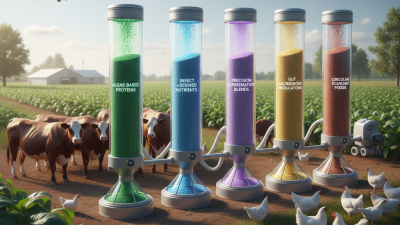
Sourcing livestock and feed globally in 2026 will require more than comparing prices. Buyers must connect animal genetics, feed quality, transport capacity, climate exposure, and supplier transparency. The OECD-FAO Agricultural Outlook 2024–2033 expects continued growth in global meat and dairy demand, especially in emerging markets. That growth will increase pressure on reliable feed ingredients, cold chains, and responsible land use.
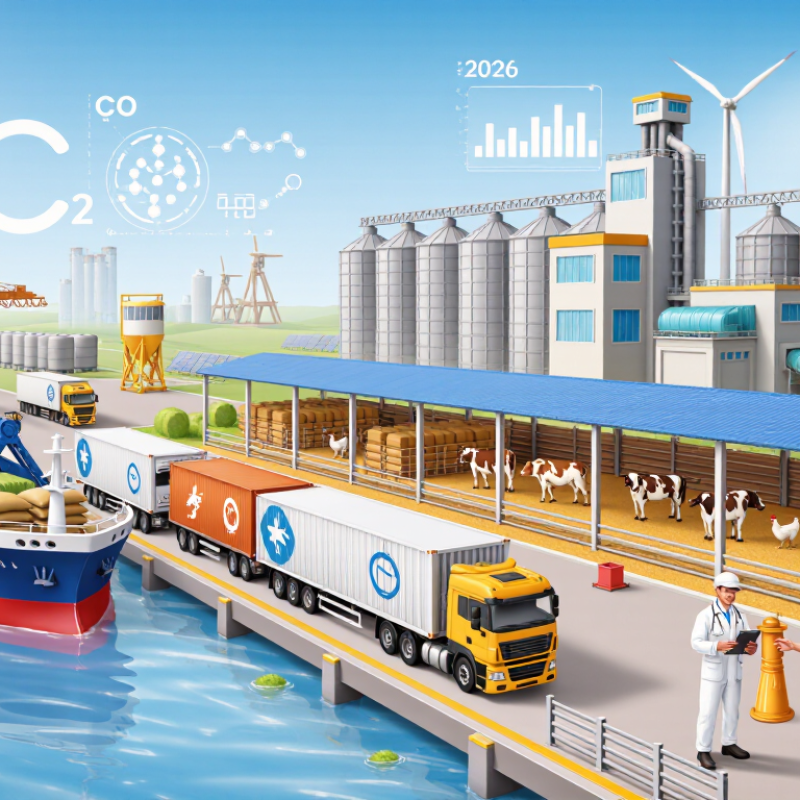
The numbers are significant. Alltech’s Agri-Food Outlook 2024 estimated global feed production at approximately 1.126 billion metric tonnes in 2023. FAO’s 2023 livestock emissions report estimated livestock agrifood systems produce about 6.2 gigatonnes of CO2 equivalent annually. These figures make sourcing decisions operational and environmental decisions. A delayed vessel can affect feed costs. High moisture in corn can invite mould. A weak traceability record can damage trust quickly.
Dr. Frank Mitloehner, an air-quality specialist at the University of California, Davis, has said, “Cows are not climate criminals.” His point does not remove responsibility. It encourages better measurement, including methane control, feed efficiency, manure management, and regional production differences. A practical 2026 sourcing plan should verify farm records, test feed for mycotoxins, review supplier audits, and map alternative ports. It should also examine soy, maize, forage, and mineral sources separately. One supplier is not resilience.
Some assumptions may fail. Cheap feed can become expensive after freight disruption or quality losses. Carbon claims can also sound impressive while lacking consistent data. Reliable sourcing therefore needs evidence, not slogans. Experience still matters, but evidence should lead.
Define 2026 livestock demand using FAO’s 1.3-billion-person livelihood estimate
How to Source Livestock and Feed Globally in 2026?
FAO’s estimate that livestock supports about 1.3 billion livelihoods gives planners a useful starting point. It does not equal global meat demand. It reflects households, workers, smallholders, traders, and service providers connected to animals. A reliable 2026 sourcing plan should separate these livelihoods from consumer demand, then compare both with regional production data.
Map demand by species, income level, climate, and purchasing habits. Beef, poultry, dairy, and small ruminants require different feed systems and transport conditions.
A dry-season village may need compact fodder blocks, while a coastal dairy region may depend on stored grain and protein meals. Track water access too. Feed availability often limits herd growth before land does.
Use current FAO data, national statistics, veterinary guidance, and supplier records together. Check moisture, contamination controls, animal-health documents, and cold-chain capacity before contracts are signed. Local harvest calendars can reveal shortages that annual reports hide.
I would avoid treating the 1.3-billion figure as precise. It is a broad livelihood estimate, not a crystal ball. Political changes, drought, disease, and currency pressure can quickly reshape sourcing decisions. My own planning model would keep a reserve supply, but the reserve may still be too small in an extreme season. That weakness deserves regular testing.
Verify animal health and welfare under WOAH’s international standards
How to Source Livestock and Feed Globally in 2026?
Global sourcing now demands more than price comparisons. Animal health and welfare must be verified before contracts are signed. WOAH’s Terrestrial Animal Health Code provides internationally recognised guidance for disease control, transport, slaughter, and welfare. It is not a substitute for local law, but it offers a practical baseline across borders.
FAO reports that livestock supports the livelihoods of about 1.3 billion people worldwide and contributes roughly 40% of global agricultural output. These figures show why weak controls can create serious social and financial risks. Ask suppliers for veterinary certificates, vaccination records, mortality data, transport times, and farm-level traceability. Check whether records match physical conditions. A clean document is not always a clean supply chain.
Tips: Inspect loading areas, water access, ventilation, flooring, and stocking density. Review feed origins and test for mycotoxins, heavy metals, and prohibited residues. The OECD-FAO Agricultural Outlook 2024-2033 expects continued growth in global meat production, increasing pressure on feed and animal-health systems. That pressure can encourage shortcuts. I have seen audits focus heavily on paperwork, while crowded pens received less attention. That remains a weakness. Use independent veterinarians, repeat inspections, and clear corrective deadlines. Do not treat one successful visit as permanent proof.
Compare feed markets against Alltech’s 1.396-billion-tonne 2024 output
Global livestock sourcing in 2026 should begin with feed, not animal prices. A 2025 global feed survey recorded 1.396 billion tonnes of compound feed production in 2024. This figure provides a useful market benchmark, but it is not a complete consumption measure. On-farm mixing and informal production can remain outside national reporting systems.
The largest feed demand still comes from poultry and pigs, while aquaculture continues gaining importance in coastal supply chains. The OECD-FAO Agricultural Outlook 2024–2033 expects population growth, urban diets, and income gains to support further meat and dairy demand. However, feed availability will differ sharply between regions. A procurement team should compare local maize, soybean meal, wheat, and mineral prices against freight costs. Check moisture and mycotoxin records before signing contracts. Small quality gaps can become large losses.
Experience matters here. A low-cost ration may fail when storage is hot, transport is delayed, or raw materials vary between shipments. The FAO Food Outlook also highlights weather and trade disruption as persistent risks for feed ingredients. I would map suppliers by port, mill, farm, and cold-storage access. Then test two delivery routes, not one. Data can look precise while remaining incomplete. That is the uncomfortable part. Feed volumes are easier to compare than feed reliability.
Build supplier due diligence around WTO SPS and traceability rules
How to Source Livestock and Feed Globally in 2026?
Build supplier due diligence around WTO SPS and traceability rules.
Global sourcing now requires more than checking price, volume, and delivery dates. The WTO Sanitary and Phytosanitary Agreement links imports to science-based measures, disease control, and food safety. Suppliers should provide veterinary certificates, laboratory results, feed composition, and origin records before shipment. The FAO estimates that 14% of food is lost between harvest and retail. Weak documentation can increase that loss through rejected loads, delays, or unclear recalls.
Traceability should follow each animal group and feed lot through defined control points. Record farm location, vaccination history, transport conditions, slaughter date, and storage temperatures. For feed, verify ingredients, additives, contamination controls, and batch numbers. The World Bank estimates that foodborne diseases cost low- and middle-income economies over 110 billion dollars annually. That figure makes supplier verification a commercial necessity, not paperwork.
Digital records help, but they do not replace physical checks. A supplier may upload polished certificates while changing farms or feed sources without notice. Review independent test results, compare shipment data, and audit high-risk origins more often. Keep a documented escalation process for missing records and suspected disease exposure. Our own process may still fail when information arrives late. That weakness deserves testing before a crisis.